Skip to content

    Navigation breadcrumbs

  1. Home
  2. Stories
  3. Kath’s story

    Navigation breadcrumbs

  1. Home
  2. Stories
  3. Kath’s story

Kath’s story

“We were told it was a simple, gold-standard fix with minimal risk. But for many, it led to life-changing and often irreversible complications.”

Kath was 47 when her life changed in ways she never imagined. Before surgery, she was active, independent, and full of energy. She trusted the system meant to protect her and the reassurance she was given. But when things went wrong, the systems that should have kept her safe did not catch her. They did not listen. Did not act.

The complications Kath faced were not isolated or unpredictable. They were part of a wider systemic pattern — gaps in regulation, oversight, limited long-term monitoring of medical devices, and a lack of honest, comprehensive consent processes for patients. Mesh was promoted as routine; as risk-free; as ‘gold standard’. But for thousands, the reality was far from that.

When Kath reported her pain and symptoms, she was dismissed by her implanting surgeon, told it would settle, and left to work out the truth alone. That moment — familiar to so many people harmed by unsafe care — is what turned her pain into purpose.
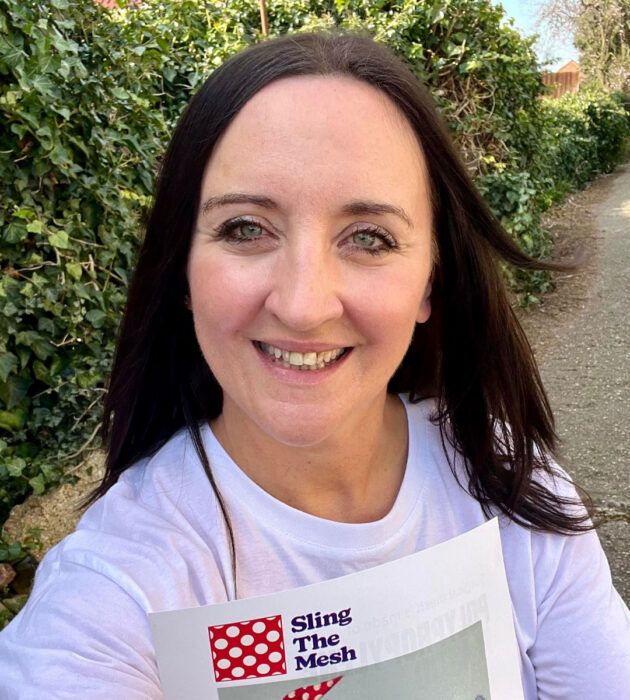
In 2015, Kath founded Sling the Mesh, a grassroots movement now supporting more than 12,000 people worldwide.

The community she built shines a light on medical harm linked to pelvic and other surgical mesh used in prolapse, bladder leaks, hernias, and cancer reconstruction. Behind every statistic are people living with nerve damage, infections, autoimmune conditions, and relentless pain. Some cannot walk. Many feel unheard. All deserved better.

Kath’s campaigning exposes system failures that allow unsafe practices to continue. Her message to those in charge of care is clear: ensure patient safety is prioritised over profit.

Her advice to others reflects the courage of someone who has lived through harm and refuses to let others carry the same burden: research fully, seek real patient stories, and know your rights before agreeing to any procedure.